
The same four or five sources on our client roster get featured almost every week. Everyone else sending pitches through the same queries, sometimes twice as many, goes quiet for months at a time. After reviewing what separates the two groups across roughly 20 active HARO and Featured.com accounts, the gap came down to fifteen specific habits, most of them small enough that sources skip them without realizing it.
None of these tips require a bigger budget or a PR background. They require doing the unglamorous parts of the process that most sources treat as optional. If you’re still getting familiar with the basics, start with our guide on what HARO backlinking actually is, or our full HARO link building guide for the end-to-end process. Everything below assumes you already understand the mechanics and want to know what actually moves a pitch from ignored to quoted.
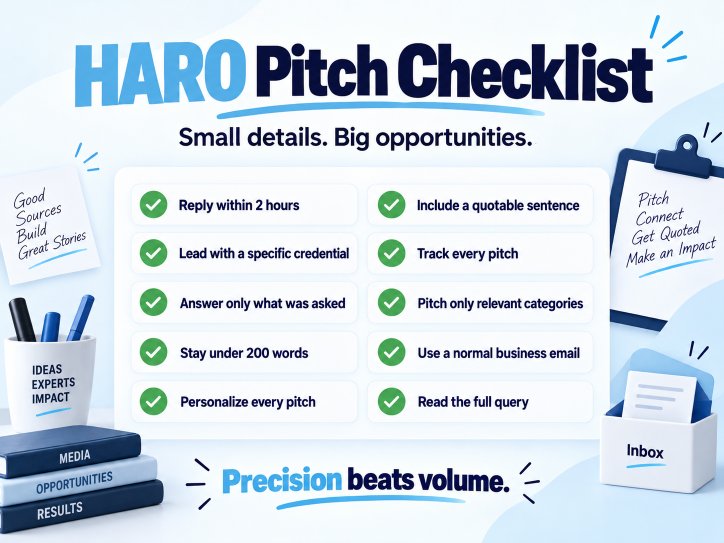
Quick Answer: Sources who get featured consistently respond to queries within the first two hours, lead with one specific number or credential instead of a job title, and answer only the exact question the journalist asked. Speed and precision beat volume. A source sending five tightly targeted pitches a week consistently outperforms one sending twenty generic ones.
15 HARO Tips for Success
1. Respond Within the First Two Hours
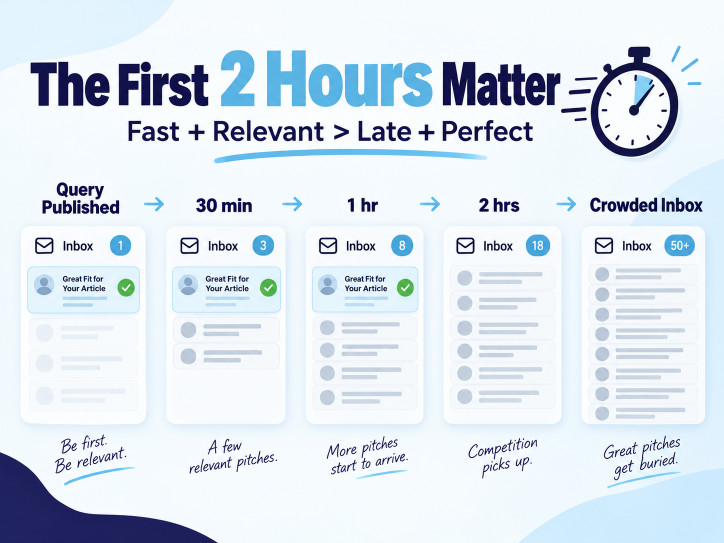
Most journalists close a query once they’ve received enough usable responses, often well before the deadline listed on the request. Queries in competitive categories like finance and health can pull 100 to 300 replies within the first few hours alone. Sources who check for new queries once a day are competing for whatever’s left after the fastest replies already filled the journalist’s needs. Check your query feed at least twice each morning if you’re serious about landing placements.
2. Lead With One Specific Credential, Not a Job Title
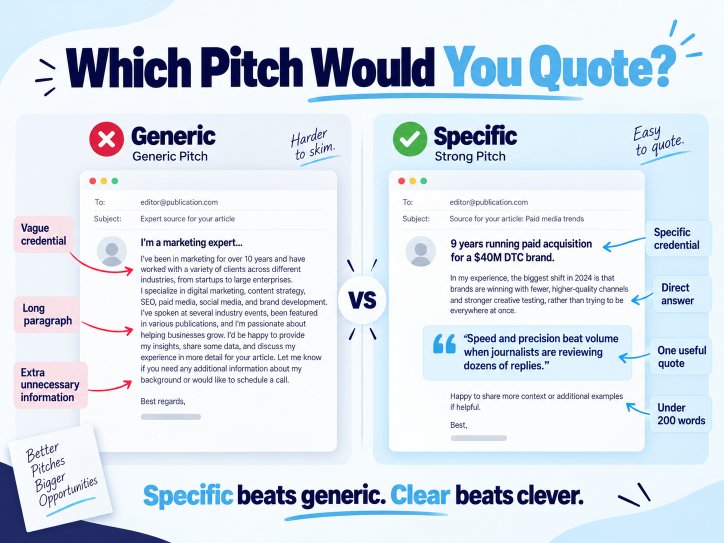
“Marketing expert” describes hundreds of people replying to the same query. “9 years running paid acquisition for a $40M DTC brand” describes one person. Journalists skim for the fact that makes a source unlike everyone else in the inbox, and a vague title doesn’t give them anything to work with. Pick the most specific, most quotable version of your background and use it every time, not just in the bio at the bottom.
3. Answer the Exact Question Asked, Nothing Else
Sources often use a pitch as an excuse to promote their entire area of expertise, which buries the one answer the journalist is actually looking for. If the query asks for one budgeting tip, send one budgeting tip. Extra angles that seem interesting but weren’t asked for read as padding, and padding is the first thing a busy journalist skims past.
4. Keep the Pitch Under 200 Words
Longer pitches don’t read as more expert. They read as more work to get through. A journalist deciding between 40 pitches for one story isn’t going to read three of them in full before making a decision. Say the one useful thing, back it with one supporting detail, and stop.
5. Never Send the Same Pitch to Two Journalists
Copy-paste pitches show up more often than sources think, and PR-savvy journalists recognize the pattern quickly, sometimes from a single generic phrase. A pitch that ignores the specific angle of one query and answers a different, similar-sounding query instead gets deleted regardless of how strong the content actually is. Every pitch needs at least one line written specifically for that exact request.
6. Write the Subject Line Last
A weak subject line can bury a strong pitch before a journalist ever opens it. Read our full breakdown of HARO subject lines that get opened for the exact formulas, but the short version is this: finish the pitch, find the single line inside it that would make you stop scrolling, and use that as the subject.
7. Use a Real Name and Photo, Not a Company Logo
Pitches that come from “PR Team” or use a stock logo as the sender photo read as inbound marketing, not as a real source. Journalists are quoting a person, not a company, and pitches that don’t look like they came from one specific human get treated with more suspicion. Send from a real name, ideally with a real photo attached if your email signature supports it.
8. Include One Fact a Journalist Can Quote Word-for-Word
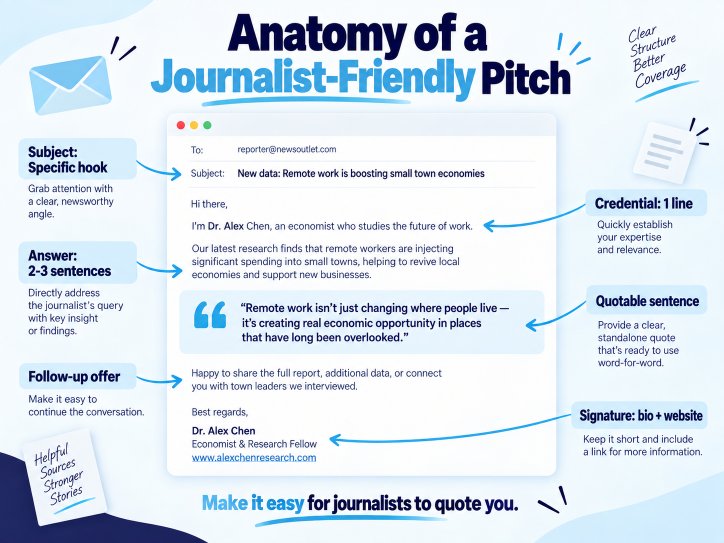
A pitch that only makes a general claim forces the journalist to do the work of turning it into a usable quote, and most won’t bother. Write one sentence in your pitch that could be lifted directly into the article with no editing. If a journalist has to rewrite your answer to make it publishable, they’ll usually skip to the next pitch that already reads cleanly.
9. Skip the Bio Paragraph in the Body
A three-sentence bio at the top of a pitch pushes the actual answer further down, past the point where a skimming journalist has already decided whether to keep reading. Put your one-line credential in the first sentence, answer the question in the next two or three, and save the fuller bio for your email signature, where it’s available if the journalist wants it but doesn’t cost you the opening.
10. Track Every Pitch You Send
Sources who don’t track pitches tend to overestimate how many they’re actually sending and underestimate how long it takes to see a pattern. A simple spreadsheet with the query date, outlet, topic, and whether you heard back turns a vague feeling of “this isn’t working” into an actual number you can improve. It also stops you from accidentally re-pitching the same journalist with a nearly identical angle.
11. Follow Query Categories That Match Your Actual Expertise
Sources who reply to every category to increase their odds usually get quoted less often, not more, because journalists can tell when an answer is generic enough to have come from anyone. Subscribing to three or four categories that match your actual background produces stronger, more specific pitches than subscribing to fifteen and skimming all of them.
12. Pitch From a Domain That Doesn’t Look Like a Mass Mailer
An email sent from a generic marketing platform domain, or one that’s clearly a bulk-sending address, can get filtered before a journalist ever sees the subject line. Pitching from a standard business or personal domain, sent like a normal one-to-one email, avoids the spam filters that a lot of agency-run accounts trigger without realizing it.
13. Read the Full Query Before Writing Anything
The query title rarely contains the actual angle a journalist wants. That detail is usually in the second or third sentence of the request, and sources who write a pitch based on the title alone often answer a slightly different question than the one being asked. Read the whole query first, every time, even the ones that look identical to ones you’ve answered before.
14. Offer a Follow-Up Line, Not a Follow-Up Email
Sending a second email a day later to ask if the journalist saw your pitch adds to their inbox without adding value, and it can read as pushy. A better approach is including one line in the original pitch offering additional data, a case study, or a follow-up call if it’s useful, so the option exists without requiring a second message.
15. Treat Rejection Silence as Data, Not a Dead End
Most HARO pitches never get a reply, including strong ones, since journalists only need one or two sources per story out of hundreds of responses. A source who sends ten pitches and gets zero replies hasn’t necessarily failed. Look for patterns across pitches, not outcomes on a single one, and adjust the habits above rather than abandoning the platform after a quiet week.
Quick Reference: Common Mistakes and Fixes
| Mistake | Fix |
|---|---|
| Waiting a day or more to respond | Check queries twice each morning, respond within 2 hours |
| Leading with a job title | Lead with one specific number or credential |
| Sending one pitch to multiple journalists | Write one line specific to each exact query |
| Long, multi-paragraph bios | One-line credential in the pitch, full bio in the signature |
| Following every query category | Subscribe to 3-4 categories matching real expertise |
Frequently Asked Questions
How many HARO pitches should I send per week to see results?
Somewhere between five and ten well-targeted pitches a week produces more placements than twenty generic ones sent to every available query. Precision matters more than volume once you’re past the first month.
Does response speed really make that much of a difference?
Yes, especially in competitive categories like finance and health. Queries in these niches can collect 100 to 300 responses in the first few hours, and many journalists stop reading new replies once they have enough usable quotes.
Should I use a different email account for different niches?
It can help if you’re pitching across genuinely unrelated fields, since it keeps your sender reputation and bio consistent for each niche. For most solo sources working in one or two related categories, one dedicated email is enough.
How long does it typically take to land a first placement?
Most new sources see their first placement somewhere in the first four to eight weeks, assuming they’re pitching consistently and following the habits above. Sources who pitch sporadically, or only when they remember to check queries, take considerably longer.
Is it worth pitching queries outside my core expertise if I have a strong opinion?
Occasionally, but sparingly. A pitch that reads as slightly outside a source’s usual lane can still land if the answer is specific and well-supported, but doing this often dilutes the credibility that makes your core-topic pitches convincing.
Final Thoughts
None of these fifteen tips is complicated on its own. What separates the sources who get featured consistently is doing all of them, every time, instead of a few of them occasionally. Start with the ones that take the least effort, respond faster and drop the bio paragraph, then build the rest into your process one at a time.
Want This Handled for You?
If keeping up with HARO queries every day sounds like more than you want to add to your plate, that’s exactly what Almpak does for over 20 clients across health, finance, real estate, legal, SaaS, and crypto. We write or personally review every pitch before it goes out, so you get the placements above without the spam risk of an unreviewed pitch. Contact us here and mention that you read this article for a special discount on your first month.
