
A HARO pitch example is worth more than any template because it shows you exactly what a journalist chose to publish, word for word. Most guides give you a fill in the blank structure and hope it works. This article does something different: it shows the actual pitches that were sent to real journalists, screenshot by screenshot, alongside the published pieces they landed in.
This guide is for bloggers, founders, and PR beginners who have read the theory on how to pitch HARO and Featured but still don’t know what a winning pitch looks like on the page.
Here’s the part most people miss: one source below did not land one placement. He landed three, across three different outlets, in three completely different roles: real estate agent, roofing and mold expert, and self-made millionaire. Same person, three angles, three separate journalists who all said yes. Once you see how that happened, you’ll pitch differently.
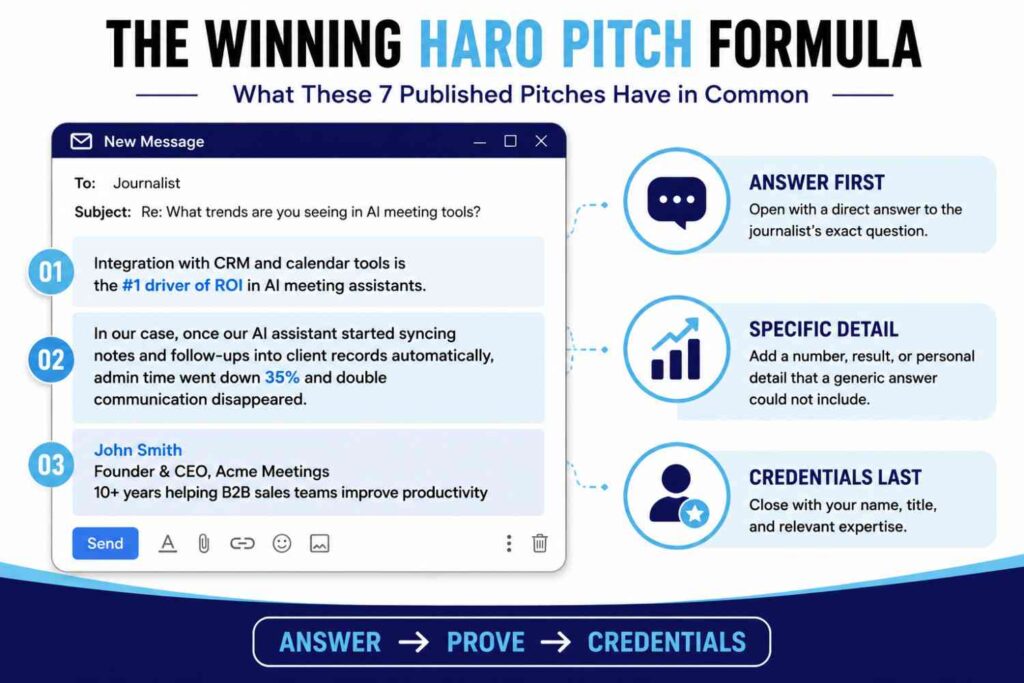
Quick Answer: A strong HARO pitch example includes a direct answer to the journalist’s exact question in the first two sentences, a specific number or personal detail that a generic answer could not include, and a short sign-off with credentials. The pitches below were published on HubSpot, Yahoo, Forbes, GOBankingRates, AOL, Eat This Not That, and SingleCare. Each one follows the same pattern: answer first, prove it second, credentials last.
What Makes a HARO Pitch Example Worth Studying?
A HARO pitch example is worth studying only if it actually got submitted with a specific journalist’s query in mind, because that intent is what separates a real pitch from a generic template. Anyone can write a paragraph that sounds good. What matters is whether it answers the exact question a reporter asked.
Most HARO advice online recycles the same fictional “before and after” pitch that no journalist ever actually received. That’s a problem, because it teaches structure without teaching judgment. Looking at real submitted pitches next to the queries they were written for shows you what specificity actually looks like from the source’s side of the inbox, before an editor ever touches it.
If you’re still fuzzy on the basics of how this process works end to end, our guide to what HARO backlinking actually is covers the setup before you get to the pitching stage.
According to Muck Rack’s 2025 State of Journalism report, 86% of journalists say they ignore pitches that are off topic for what they cover, even when the pitch itself is well written. That single stat explains why the examples below matter: every one of them answered the exact question asked, in the exact niche the journalist was already covering.
7 Real HARO Pitch Examples
Each pitch below is shown exactly as submitted, with the query type it was written for, the outlet it landed in, and a breakdown of why the structure worked.
1. AI Meeting Assistant Pitch (HubSpot)
The query type: A journalist researching what actually drives ROI from AI meeting assistants for B2B sales teams, specifically around tool integration.
The pitch as submitted:
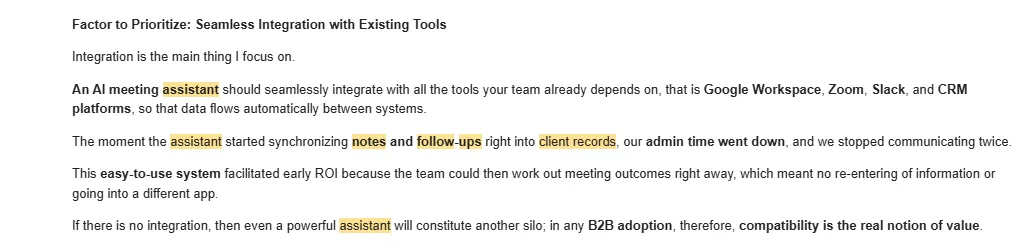
Published in: HubSpot, “Best AI meeting assistants that actually drive ROI for B2B teams”
Why it worked:
The pitch opens with a one-line answer to the exact question asked (integration is the priority), then backs it with a specific result: admin time went down and the team stopped double-communicating once the assistant started syncing notes and follow-ups into client records automatically.
That last clause, tying integration to a measurable operational outcome instead of a feature description, is what HubSpot’s sales blog needed. The blog covers tools from a practitioner’s angle, not a marketing angle, and this pitch gave the writer a practitioner’s specific experience to quote rather than a generic endorsement of “seamless integration.”
2. Social Media Home Decor Trends Pitch (Yahoo)
The query type: A journalist collecting predictions from real estate professionals on which social-media-driven decor trends actually hurt a home’s resale value.
The pitch as submitted:
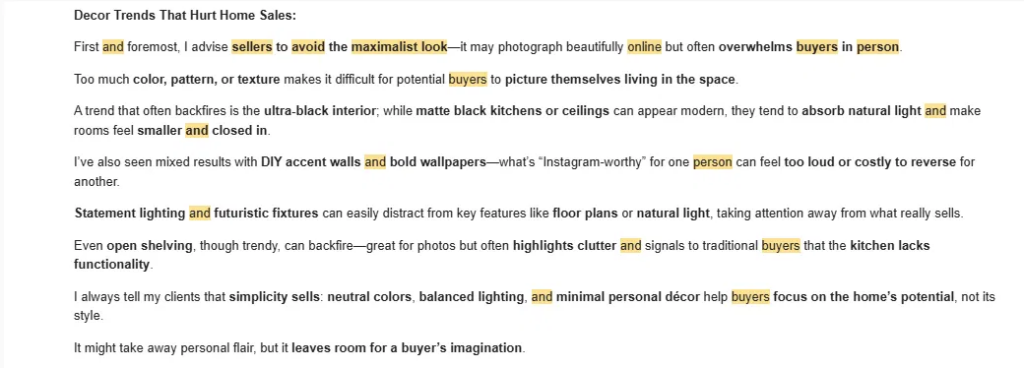
Published in: Yahoo, “8 Social Media Decor Trends That’ll Make Your Home Harder to Sell, According to Real Estate Agents”
Why it worked:
Instead of one general answer, the pitch supplied four separate, nameable trends, each with a one-line reason it backfires with buyers. That structure matches exactly how roundup articles get built: one trend per source, one paragraph per trend.
A pitch that hands a journalist four ready-made section entries in a single reply is far easier to slot into a listicle than a pitch that offers one broad opinion on “social media and home design.”
3. Halloween Home Hazards Pitch (Forbes)
The query type: A journalist researching hidden household hazards, tied to a seasonal Halloween home-safety feature, and asking industry pros to name the scariest and most commonly overlooked problems.
The pitch as submitted:
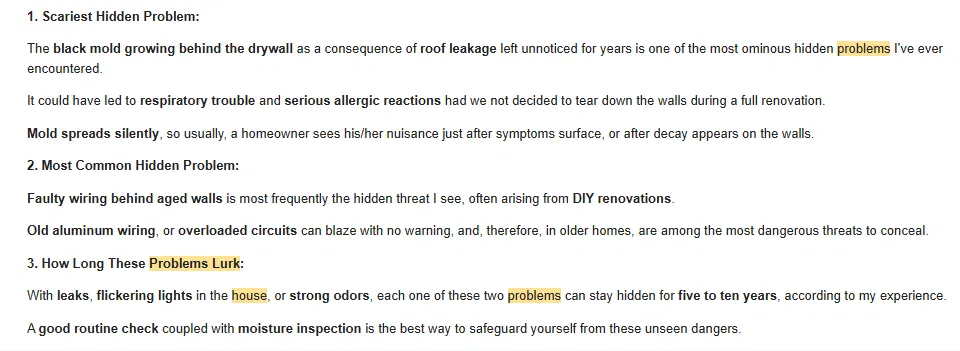
Published in: Forbes, “Halloween Home Hazards: 8 Scary Problems Lurking In American Houses”
Why it worked:
The pitch is structured as a mini-outline: scariest problem, most common problem, how long these problems typically hide undetected.
That structure mirrors how Forbes builds contributor roundups, one hazard, one mechanism, one credentialed voice per point, so the journalist could lift each section almost as written. Forbes real estate contributor pieces favor named professionals attaching a specific credential to a specific claim, not a general safety opinion, and this pitch supplied both.
What this reveals:
The source behind pitches 2 and 3, and behind pitch 4 below. Three placements, three outlets, three different query types, from one person who kept answering the exact question each journalist asked instead of reusing the same paragraph everywhere.
4. Self-Made Millionaire Side Gig Pitch (GOBankingRates)
The query type: A journalist collecting personal stories about unconventional paths to a first million dollars, for a feature on side gigs that grew into real income.
The pitch as submitted:
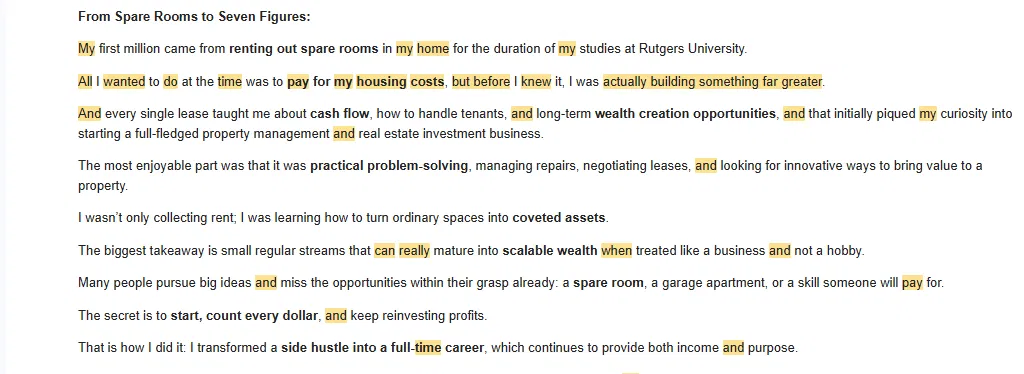
Published in: GOBankingRates, “I’m a Self-Made Millionaire: How the Most Fun Side Gig I Ever Had Made My First Million”
Why it worked:
The pitch tells one specific story with a real starting point, renting spare rooms during college, and a real result, a full property management and real estate business. That narrative arc is what GOBankingRates’ personal finance roundups are built around.
A pitch that reads like a story beats a pitch that reads like general advice, even when the underlying lesson (start small, reinvest, treat it like a business) is something every finance site has said before.
5. Early Retirement Through Real Estate Pitch (AOL Personal Finance Roundup)
The query type: A journalist researching how people retired early through intentional investing decisions rather than luck.
The pitch as submitted: the source for this pitch has asked that the screenshot not be published, so we’re not including it here. The rest is described from our source notes instead.
The pitch anchored on one exact figure spent on education before retiring, then tied that number directly to a specific outcome: passive income that now exceeds living costs. The $48,000 figure and the closing sign-off both survived into the published piece.
Why it worked:
Concrete numbers do work that adjectives can’t. A pitch that says “I invested wisely” is forgettable. A pitch that says a specific dollar figure and a specific timeline gives an editor something to build a pull quote around.
If you’re pitching early-retirement or FIRE-adjacent queries, lead with your number before your philosophy.
6. Seafood Freshness Standards Pitch (Eat This, Not That!)
The query type: A journalist researching which restaurant chains are known for consistently fresh seafood, for a roundup naming the chains that get it right.
The pitch as submitted:
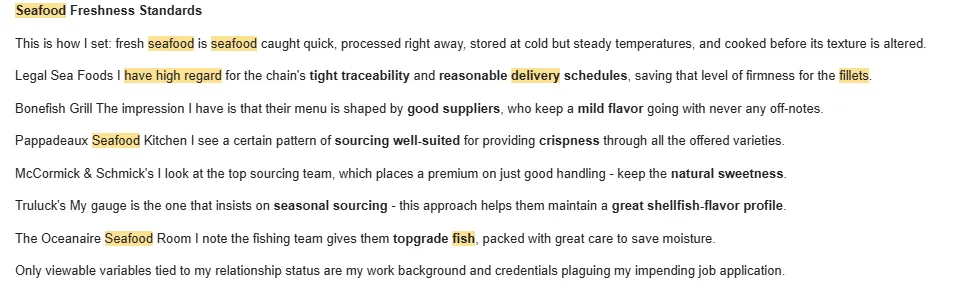
Published in: Eat This, Not That!, “4 Restaurant Chains That Serve the Freshest Seafood, According to Seafood Experts”
Why it worked:
The pitch answers with a chain-by-chain breakdown, one line of reasoning per chain, which is exactly the shape a “best of” restaurant roundup needs.
Food and lifestyle listicles are built one entity per point, so a pitch organized that way, rather than a general statement about the seafood industry, gave the writer pre-built sections to select from instead of one broad answer to summarize.
7. Generic Effexor (Venlafaxine) Pitch (SingleCare)
The query type: A journalist, working with a medical reviewer, researching the clinical differences between brand-name and generic antidepressants.
The pitch as submitted:
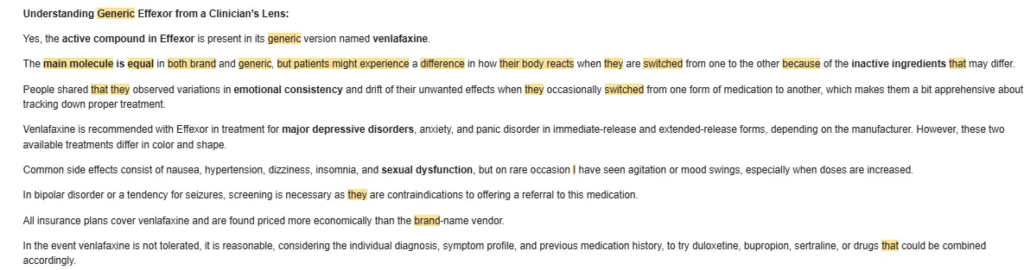
Published in: SingleCare, “Brand-name vs. generic Effexor”
Why it worked:
Health publications need a credentialed voice using precise, hedge-free clinical language. This pitch named the mechanism directly (same active compound, different inactive ingredients, different patient response on switching) instead of hedging with “some people react differently.” That specificity is what let a medical reviewer clear the quote for publication.
What These 7 Pitches Have in Common?
Every one of these pitches answered a narrow question with a specific, checkable detail. None of them opened with “I’d love to contribute” or a paragraph about the source’s company before getting to the point. Answer first is the pattern that connects all seven, confirmed or not.
None of these pitches tried to cover more than one angle. The decor trends pitch didn’t also mention roofing. The millionaire pitch didn’t also pitch a productivity tip. Journalists build articles section by section, and a pitch that tries to fill two sections usually fills none.
The clearest lesson in this set isn’t any single pitch, it’s Joseph Keshi appearing three separate times across pitches 2, 3, and 4. He didn’t send the same paragraph to three journalists.
He sent a decor-trends answer to a decor query, a home-hazards answer to a Halloween safety query, and a personal wealth-building story to a side-gig query. Same person, three completely different angles, three yeses. That’s the model: one subject-matter expert, many query-specific answers, not one canned bio pasted everywhere.
How to Turn These Examples Into Your Own Pitch?
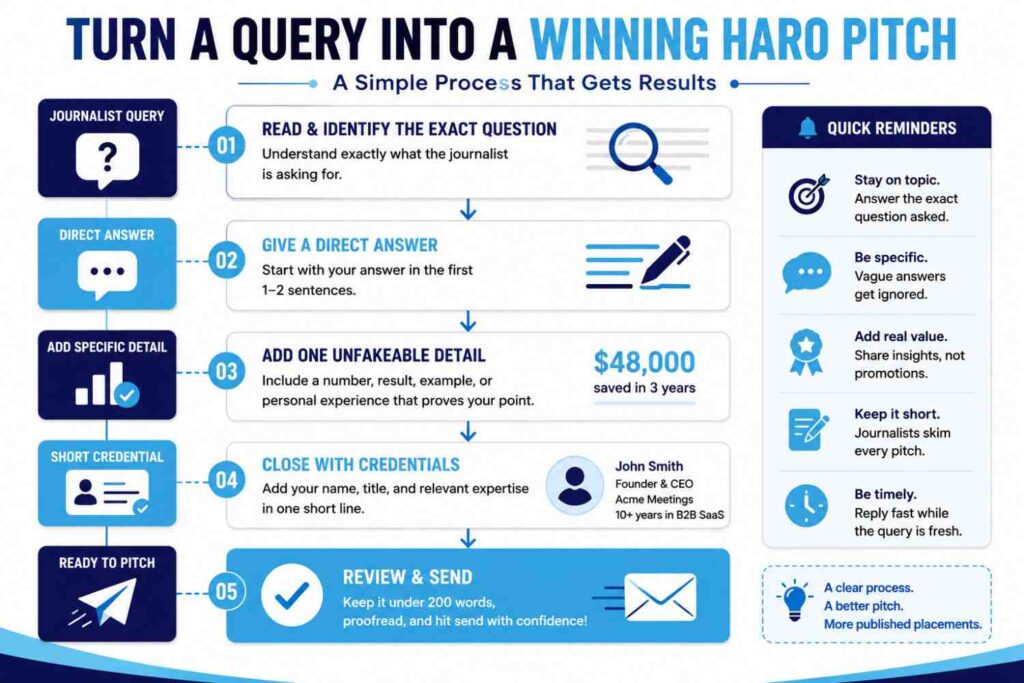
Turning a pitch example into your own pitch means copying the structure, not the words. Here’s the process broken into steps you can apply to any query today.
- Read the query twice before writing anything. Underline the exact question being asked. If the query asks “what’s one trend you’re seeing,” your entire first sentence should answer that literally.
- Answer the question in your first sentence. Skip the greeting, skip “thanks for the opportunity,” and skip your company description. Journalists scan the first line to decide whether to keep reading.
- Add one specific, unfakeable detail. A dollar amount, a client count, a named brand, a date, or a personal story detail. Generic claims get cut. Specific claims get quoted.
- Match the publication’s tone. Read one existing article from the outlet before writing. A pitch to Forbes and a pitch to Eat This, Not That! should not sound the same.
- Keep it under 200 words total. According to Muck Rack’s 2025 data, 65% of journalists prefer pitches under 200 words, and several have said publicly they rarely read past the first 200.
- Close with a one line credential, not a bio. Name, title, and one relevant credential is enough. A three paragraph bio at the bottom gets skipped.
- Send within the first two hours of the query going live. Journalists on tight deadlines often stop reading responses once they have enough usable quotes, sometimes within hours of the query posting.
The step most people get wrong is step 7. A well written pitch sent 18 hours late loses to a mediocre pitch sent in the first two hours, because the journalist has often already selected their sources by then.
Common Mistakes These Pitches Avoided
Mistake 1: Pitching a related topic instead of the exact topic.
A source pitching general home safety tips to the Halloween hazards query would have been ignored, because the journalist needed hazards specific to hidden, long-term problems, not general home safety. Answer the query that was actually sent, not the query you wish had been sent.
Mistake 2: Leading with company background.
None of the pitches above opened by describing the source’s company or years in business. That information came last, if at all. Leading with it buries the one thing the journalist is scanning for: the actual answer.
Mistake 3: Writing in vague, hedge-heavy language.
Phrases like “it really depends” or “in my experience, sometimes” rarely survive an edit. The Effexor pitch avoided this by stating the clinical mechanism directly instead of hedging around it.
Mistake 4: Responding to queries outside the source’s actual expertise.
We have seen pitches sent to finance queries from sources with no finance background, hoping generic enthusiasm would be enough. It never is. Journalists, particularly on health and finance stories, often verify a source’s background before publishing, and a mismatch kills the pitch even if the writing itself is strong.
Mistake 5: Sending one pitch to every query in a digest without filtering first.
Replying to every query in a HARO or Featured digest, related or not, wastes the two hour response window on the queries that actually matter. Our guide to finding relevant HARO queries walks through how to filter a digest down to the 2 or 3 queries worth a reply, which matters because unrelated pitches don’t just get ignored, they can flag an account as low quality over time.
Best Tools for Writing and Tracking HARO Pitches
| Tool | Best For | Price | Pros | Cons |
|---|---|---|---|---|
| Gmail + a spreadsheet | Solo pitchers just starting out | Free | Zero setup cost, full control over templates | Manual tracking, easy to miss the 2 hour window |
| Notion | Organizing pitches across multiple clients | Free to $10/mo | Flexible database views, good for client reporting | Not built specifically for HARO workflows |
| Make.com | Automating digest triage and reply drafting | From $9/mo | Can auto-filter irrelevant queries and draft first responses | Requires setup time and some technical comfort |
| Qwoted | Finding pitch opportunities beyond HARO digests | Free tier available | Ongoing opportunities, not just one daily email | Smaller volume of queries than HARO at peak times |
We personally run pitch triage through Make.com connected to Gmail, because sorting a 100+ query digest by hand every morning was the single biggest time cost in our HARO workflow before automating it.
If you’re finding fewer usable queries in your HARO digest lately, it’s worth looking at platforms beyond HARO that fill the same gap.
Frequently Asked Questions
What does a good HARO pitch example actually look like?
A good HARO pitch example answers the journalist’s exact question in the first sentence, includes one specific and checkable detail, and closes with a short credential line. The examples above each follow this same three part structure.
How long should a HARO pitch be?
A HARO pitch should stay under 200 words. Muck Rack’s 2025 State of Journalism data found that 65% of journalists prefer pitches under 200 words, and several have said they rarely read past that point.
Do HARO pitches need to include credentials?
Yes, HARO pitches should include a name, title, and one relevant credential at the end. Health, finance, and legal queries in particular often require a verifiable credential before a journalist will use the quote.
Why do most HARO pitches get ignored?
Most HARO pitches get ignored because they answer a related topic instead of the exact question asked. Muck Rack’s 2025 research found that 86% of journalists ignore pitches that are off topic for what they cover, even when well written.
Should I send the same pitch to every query in a HARO digest?
No, sending the same pitch to every query in a digest lowers your reply rate and wastes your response window on queries that were never a fit. Reply only to queries that match your actual expertise, and check our guide on finding relevant HARO queries for a filtering process.
Can one source land more than one placement with different pitches?
Yes. Pitches 2, 3, and 4 in this article all came from the same source, Joseph Keshi, pitched to three different outlets on three different topics: decor trends, home hazards, and a personal wealth-building story. Each pitch answered its specific query directly instead of reusing the same generic bio, which is why all three landed.
What’s the fastest way to write a pitch that matches a journalist’s tone?
The fastest way is to read one existing article from that outlet before writing. Note whether the tone is clinical, casual, or narrative, then match that tone in your opening sentence rather than defaulting to a generic corporate voice.
Final Thoughts
Looking at real submitted pitches next to the queries they targeted is more useful than reading templates, because templates show you a shape and real pitches show you the specific decisions a source made under a two-hour deadline. Use these as a reference the next time a query lands in your inbox, not as scripts to copy word for word.
Here’s what to do with this today: pull up your last HARO digest, pick the one query that most closely matches your actual expertise, and rewrite your draft pitch so the first sentence directly answers the question, nothing else. That one change moves more pitches from ignored to published than any other single edit.
